Pork Bistek Onion Overload
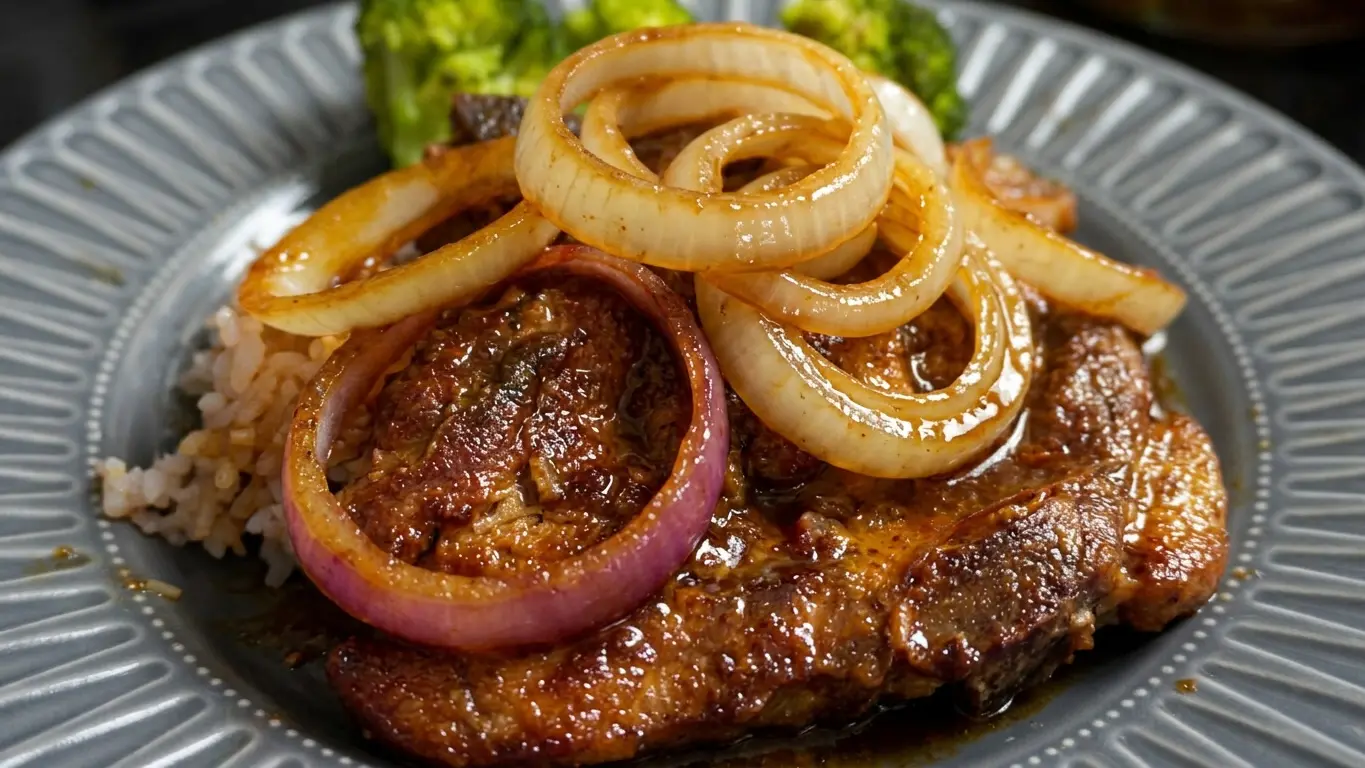
Pork chops braised in soy sauce, calamansi, and pepper, then piled high with onion rings. Watch our latest video and cook along!
Everybody knows bistek as a beef dish—thin slices of karne ng baka soaked in toyo and kalamansi. But pork chops take to that same marinade beautifully, and honestly? Mas mura, mas madali, at mas malasa. The fat in the pork melts into the sauce and gives you a richness that lean beef simply cannot match.
The real star here, though, is the onions. Not the quick blanched rings you toss on at the last second, but onions cooked down slowly until they turn sweet and jammy. That sweetness is what balances the salt of the soy and the sourness of the citrus.
Watch the Video
If you enjoy the video, do not forget to subscribe to our YouTube channel so you never miss a new recipe.
Ingredients
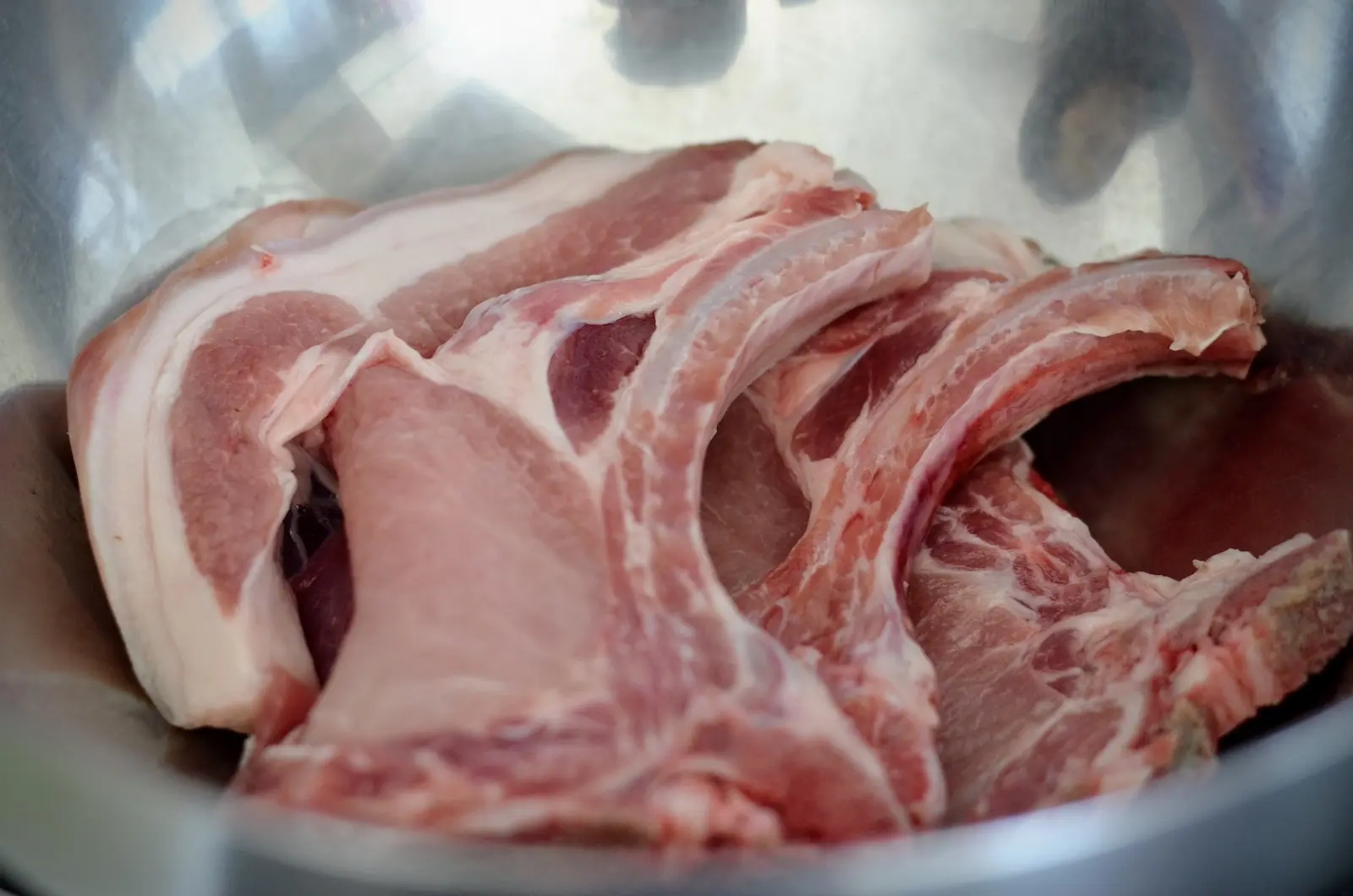
- 1 kg pork chops or pork steak cuts, about 1.5 cm thick
- 1/3 cup soy sauce (toyo)
- 1/4 cup calamansi juice (about 10–12 pieces), or 2 tablespoons lemon juice
- 4 cloves garlic, crushed
- 1 teaspoon whole peppercorns, cracked
- 3 large white or yellow onions, cut into thick rings
- 1 red onion, cut into rings (for topping and color)
- 2 tablespoons cooking oil
- 1 tablespoon butter (optional, for the onions)
- 1 teaspoon brown sugar
- 1 cup water or broth
- Salt, to taste
How to Cook
- Combine the soy sauce, calamansi juice, garlic, and cracked peppercorns in a bowl. Add the pork chops, turn them to coat, and let them marinate for at least 1 hour—overnight in the fridge is even better.
- Lift the pork out of the marinade and pat it dry. Reserve the marinade—that is your sauce later. Drying the surface is what lets the meat brown instead of steam.
- Heat the oil in a wide pan over medium-high heat. Sear the chops in batches until deeply browned on both sides, then set them aside. Do not crowd the pan or the pork will simply boil in its own juices.
- Lower the heat and add the butter and the white onion rings to the same pan. Sprinkle in the brown sugar and cook slowly, stirring now and then, until the onions collapse into a soft golden tangle. This takes 10 to 15 minutes—give it the time.
- Scoop out about half the onions and reserve them for topping. Pour the reserved marinade into the pan and let it bubble for a minute or two to cook off the raw soy taste.
- Return the pork to the pan, add the water or broth, cover, and simmer gently for 25 to 30 minutes until the chops are fork-tender and the sauce has reduced and turned glossy.
- Taste the sauce. Add a splash more calamansi if it needs brightness, a pinch of salt if it falls flat, or a little water if it has gone too strong.
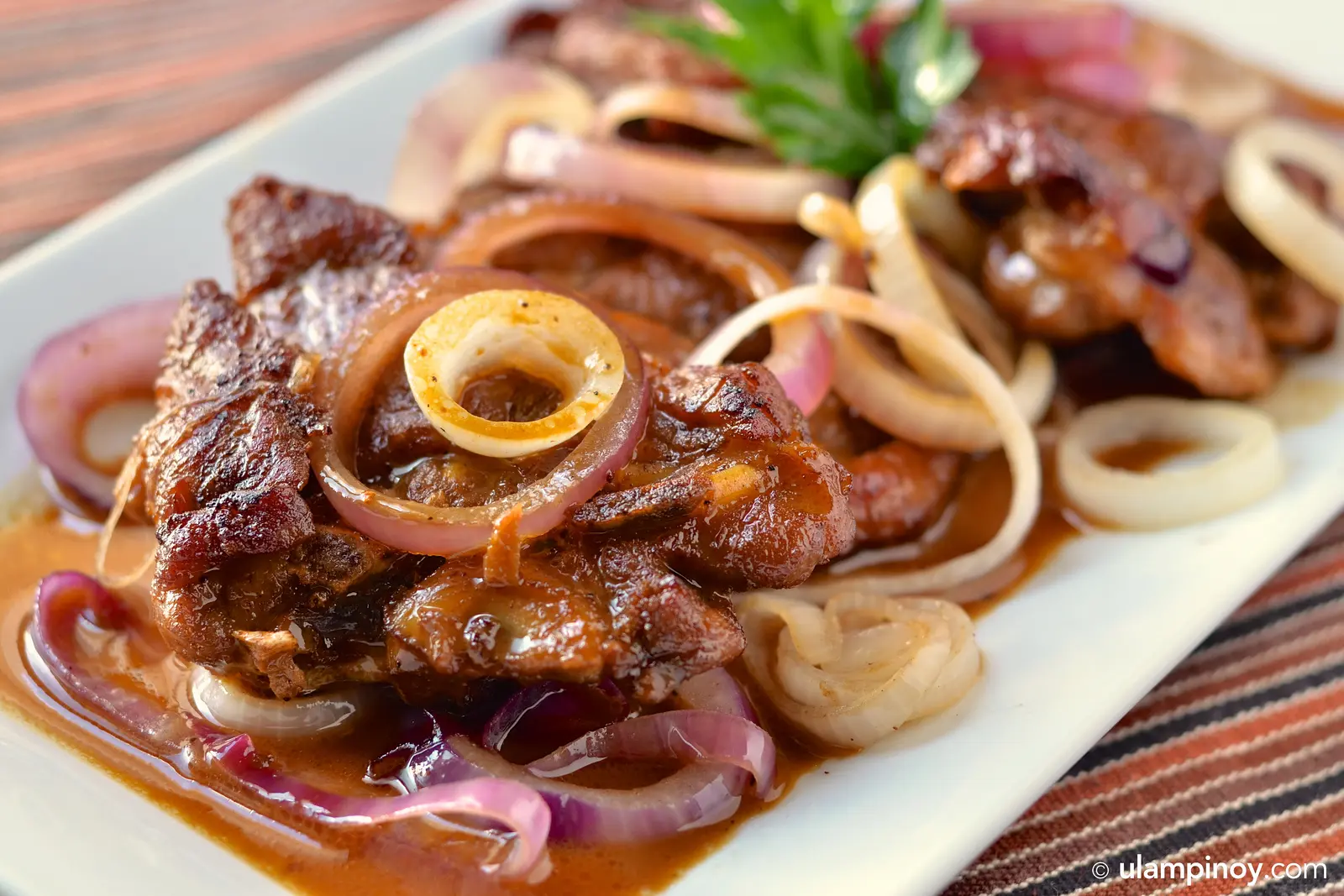
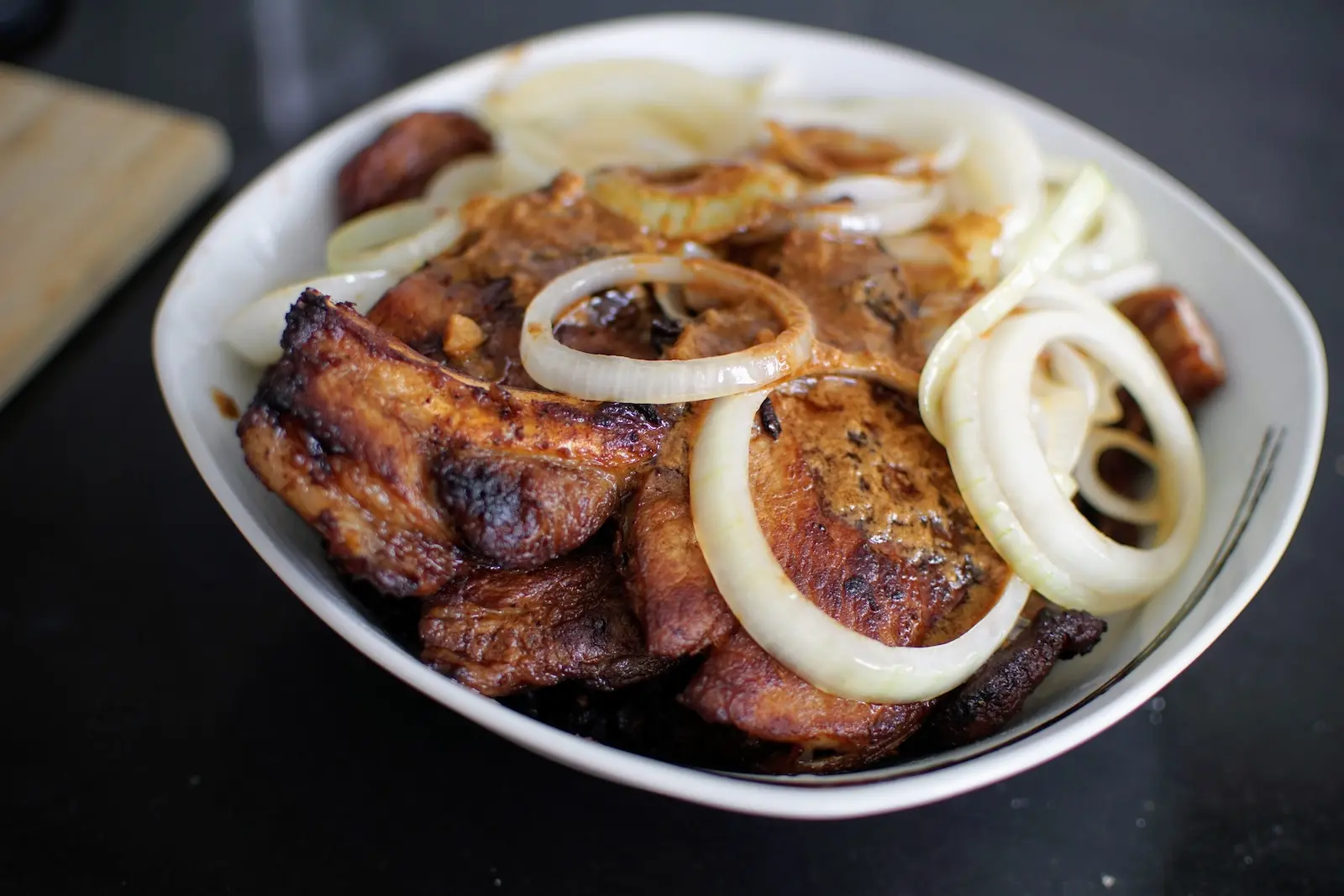
- Top with the reserved caramelized onions and the raw red onion rings, then serve hot with plenty of rice and something green on the side.
Tips for a Better Pork Bistek
Pat the meat dry before searing. Soy sauce burns fast and wet meat will not brown. Dry the surface, get the pan properly hot, and you get that dark crust that carries the whole dish.
Do not rush the onions. Caramelizing is not the same as sautéing. Those extra ten minutes over low heat are what turn sharp onions into something sweet enough to stand up to the toyo.
Keep some onions raw. The soft cooked rings go into the sauce; a few crisp red rings go on top. That contrast in texture and bite is what makes each mouthful interesting.
Let it simmer, do not boil it hard. Pork chops tighten up over aggressive heat. A slow, covered simmer relaxes the meat and reduces the sauce at the same time.
Sear, then braise—in that order. The browning builds the flavor base and the braise makes it tender. Skip the sear and you get pale, one-note bistek.
Make It Your Own
Pork belly (liempo) works if you like it richer, and thin-cut pork loin cooks faster for a weeknight. Some households add a splash of oyster sauce for body, or a couple of siling haba for a gentle heat that never overwhelms the citrus. Kung walang kalamansi, dayap or lemon will carry you through—just add it in stages and taste, since bottled juice can be much sharper.
Try it with pork once and it might just become the version your family asks for.
Have you cooked bistek with pork? We would love to see your version! Tag us on Instagram at @ulampinoy and share your cooking with us.
Happy cooking, and kain na!